
DeSoto, TX • Dallas County • Blog
Is a Sagging Ceiling Dangerous After a Water Leak in DeSoto, TX?
Is a sagging ceiling dangerous? Yes. A ceiling that sags or bulges after a water leak is holding trapped water, and wet drywall is far heavier and weaker than dry board. A bulging section can drop all at once, with no more warning than the sag itself. Clear the room, keep everyone out from underneath it, and call (469) 933-0245 — DeSoto Drywall Pros answers 24/7.
A brown stain on the ceiling is a warning. A sagging ceiling is an emergency. If the ceiling over your living room, bedroom, or kitchen is bowing down, the drywall is already failing. This guide explains why a sagging ceiling is dangerous, what to do in the next ten minutes, what never to do, and how the repair works once a crew arrives in DeSoto, TX.
24/7 • DeSoto, TX 75115 & 75123 • By DeSoto Drywall Pros • November 6, 2026
The Short Answer
Why Is a Sagging Ceiling Dangerous?
Drywall is a sheet of gypsum wrapped in paper. Dry, a standard 4-by-8 sheet weighs about 55 pounds and hangs from screws in the ceiling joists. Wet, that same sheet can weigh three to four times as much, because gypsum soaks up water like a sponge. At the same time, the wet paper face and the softened gypsum lose their grip on the screws. The board is heavier and weaker at the same moment, and the screws are holding less.
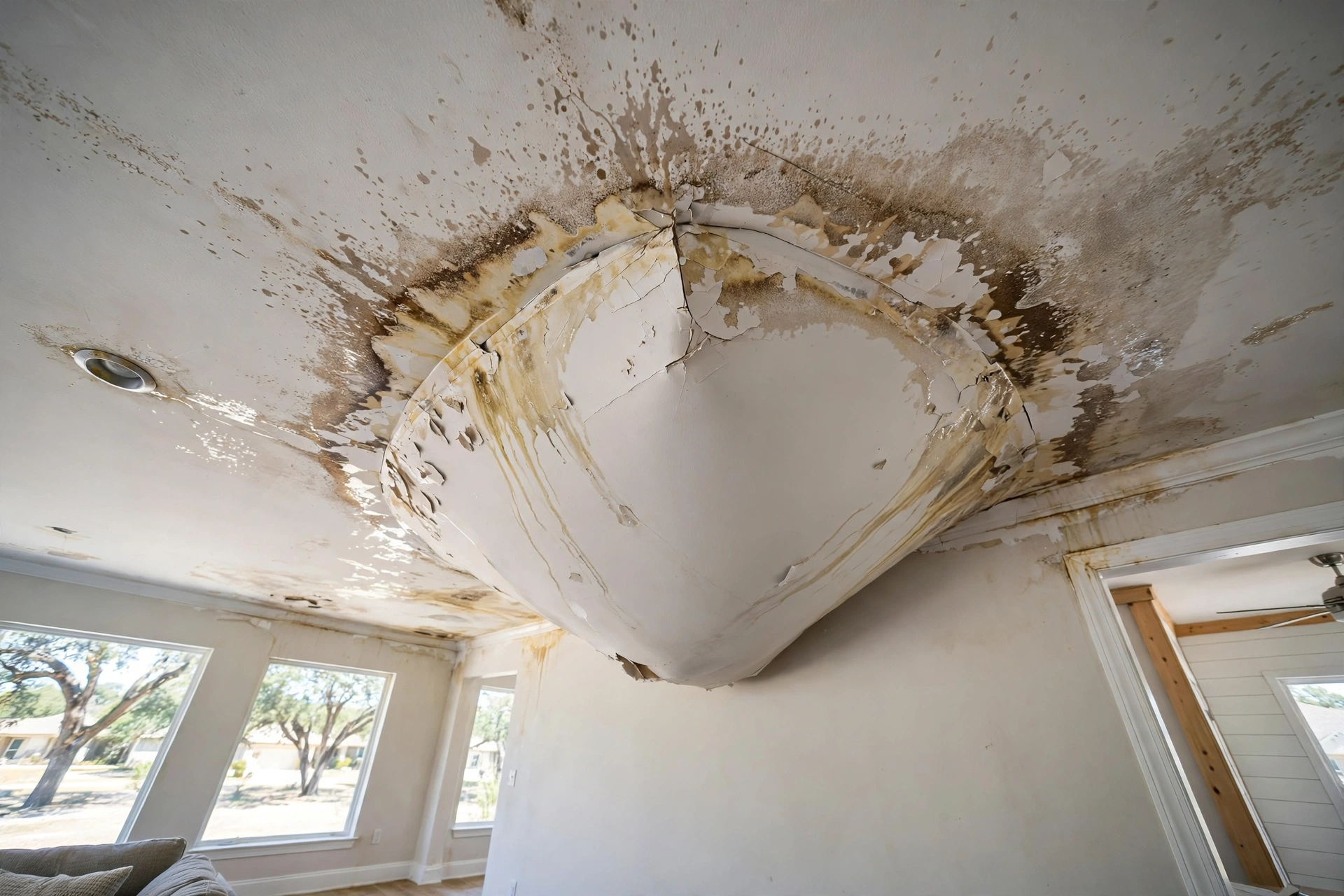
That is what makes a sagging ceiling dangerous. The sag is not the ceiling slowly getting worse in a straight line. It is water pooling in the lowest part of the ceiling, stretching the board until the screws pull through or the board tears. When it lets go, it does not come down a little at a time. A whole section can drop in one go, bringing wet insulation and trapped water with it. Anything underneath — a sofa, a bed, a person — takes the full weight.
There is a second danger that is easy to miss. Water in a ceiling can reach light fixtures, ceiling fans, and wiring. A wet ceiling near a light is an electrical risk as well as a falling risk. If the sag is near a light fixture, or water is dripping from a fixture, turn off the power to that room at the breaker panel and stay out of the room.
A dry, faint stain is mostly cosmetic. A bulging, sagging, or dripping ceiling is not. Treat the sag as an emergency, even if it looks like it has been there a while. Sagging ceilings have fallen hours and even days after the leak stopped, because the board keeps softening while it stays wet.
How Heavy?
How Much Water Can a Sagging Ceiling Hold?
More than most people expect. A gallon of water weighs about 8.3 pounds. A ceiling bulge the size of a beach ball can easily hold several gallons. Ten gallons is more than 80 pounds of water, hanging from a board that was only ever meant to hold its own weight. Add wet insulation above the board — blown-in or batt insulation soaks up water and holds it against the drywall for days — and the load grows again.
That weight is also uneven. Water pools at the lowest point, so the middle of the sag carries the most load while the edges are already tearing. The ceiling can look stable while the screws in the middle are already pulling through the softened board. You cannot judge how close it is to falling by looking at it. A ceiling that has sagged an inch can hold for another day, and a ceiling that has sagged three inches can fall while you are standing under it looking up.
This is why professionals treat every sagging ceiling as an emergency, and why the first step is always the same: get everyone out from underneath it. Do not try to measure the sag, press it to see how soft it is, or poke it to see if water comes out. All three put you under a load that can fall without warning.
A ceiling stain is a warning. A sag or bulge means the drywall is already holding pooled water.
Warning Signs
Sagging Ceiling Warning Signs, From Small to Serious
Ceiling water damage usually shows up in stages. Knowing the order helps you act before the dangerous stage arrives.
- A brown or yellow stain. The earliest sign. The drywall is wet, but still flat and firm. The leak needs fixing and the board needs drying, but the ceiling is not about to fall.
- Bubbling or peeling paint. Water is pushing the paint off the board. The drywall underneath is wet and softening.
- A soft spot. Press gently from the side, never from underneath. If the board gives under light pressure, the gypsum has lost its strength.
- A bulge or sag. The board is holding pooled water. This is the emergency stage. Clear the room.
- Dripping or a crack that is growing. Water is finding its way through, or the board is tearing at the seams. Stay out of the room and call for help.
- A musty smell. The cavity above the ceiling has been wet long enough for mold to start growing on the paper face of the drywall. Mold can begin within 24 to 48 hours on wet materials.
If you only have a stain, you have time to fix the leak and get the ceiling checked. If you have a bulge, you do not have time to wait and see. Move furniture, beds, and anything valuable out from under the sag if you can do it safely from the side of the room. Do not stand on a chair under the bulge to move a light fixture or take a photo from below.
What To Do Now
What to Do Right Now If Your Ceiling Is Sagging
Do these five things, in this order, and do not skip the first one.
Clear the room
Get everyone, including pets, out from under the sagging section. Move what you can from the side of the room, not from underneath.
Stop the water
If the leak is from a pipe, shut off the water. If it is a roof leak, put a bucket under the drip and tarp the roof only if it is safe to do so.
Cut the power
If water is near a light fixture, fan, or smoke detector, switch off that room at the breaker panel. Do not touch a wet fixture.
Call for help
Call (469) 933-0245. Tell us the ceiling is sagging, where it is, and whether water is still coming in. We answer 24/7.
While you wait, put down buckets and towels under the drip, and take photos of the stain and the sag from a safe distance, standing to the side. Photos help with an insurance claim, and they help us plan the repair before we arrive. Do not climb into the attic above a sagging ceiling. The insulation up there is wet, the joists may be wet, and the ceiling below you is the same board that is already failing.
Never Do This
What Never to Do With a Sagging Ceiling
Good intentions cause most of the injuries with sagging ceilings. These are the mistakes to avoid.
- Do not stand under it to inspect it. Looking up at a bulge puts you exactly where the water and board will land.
- Do not poke the middle of the bulge. A hole in the middle of a sag releases all the trapped water at once, in a rush, along with chunks of wet drywall. A controlled drain, if one is needed, is a small hole at the lowest edge, made from the side, with the room cleared and a container in place — and it is a job for a crew, not a homeowner standing on a chair.
- Do not paint over it. Paint does nothing for a ceiling that is holding water. It traps moisture, hides the sag, and the stain bleeds straight through. A sagging ceiling needs the wet board cut out, not a coat of paint.
- Do not ignore it because the leak stopped. The board stays wet and keeps softening after the water stops. A ceiling can fall days after the leak is fixed if the cavity above it never dried.
- Do not dry it with a heat gun or a space heater. Forcing hot air at wet drywall can crack the board, damage wiring, and start a fire. Drying is done with air movers and a dehumidifier, after the wet board is out.
The Repair
How a Sagging Ceiling Is Repaired in DeSoto, TX
Once the room is safe, the repair follows a fixed order. Nothing is covered up until the ceiling is dry.
First, we find and fix the source of the water — a roof leak, a pipe in the bathroom above, an AC drain line, or a failed shower seal. Repairing the ceiling before the leak is fixed guarantees a second stain. Then we drain any trapped water in a controlled way, from the side, with the room cleared. Next, the sagging and soft drywall is cut out, back to dry, solid board, along with any wet insulation above it. Wet insulation holds water against the framing for days, so it comes out with the board.
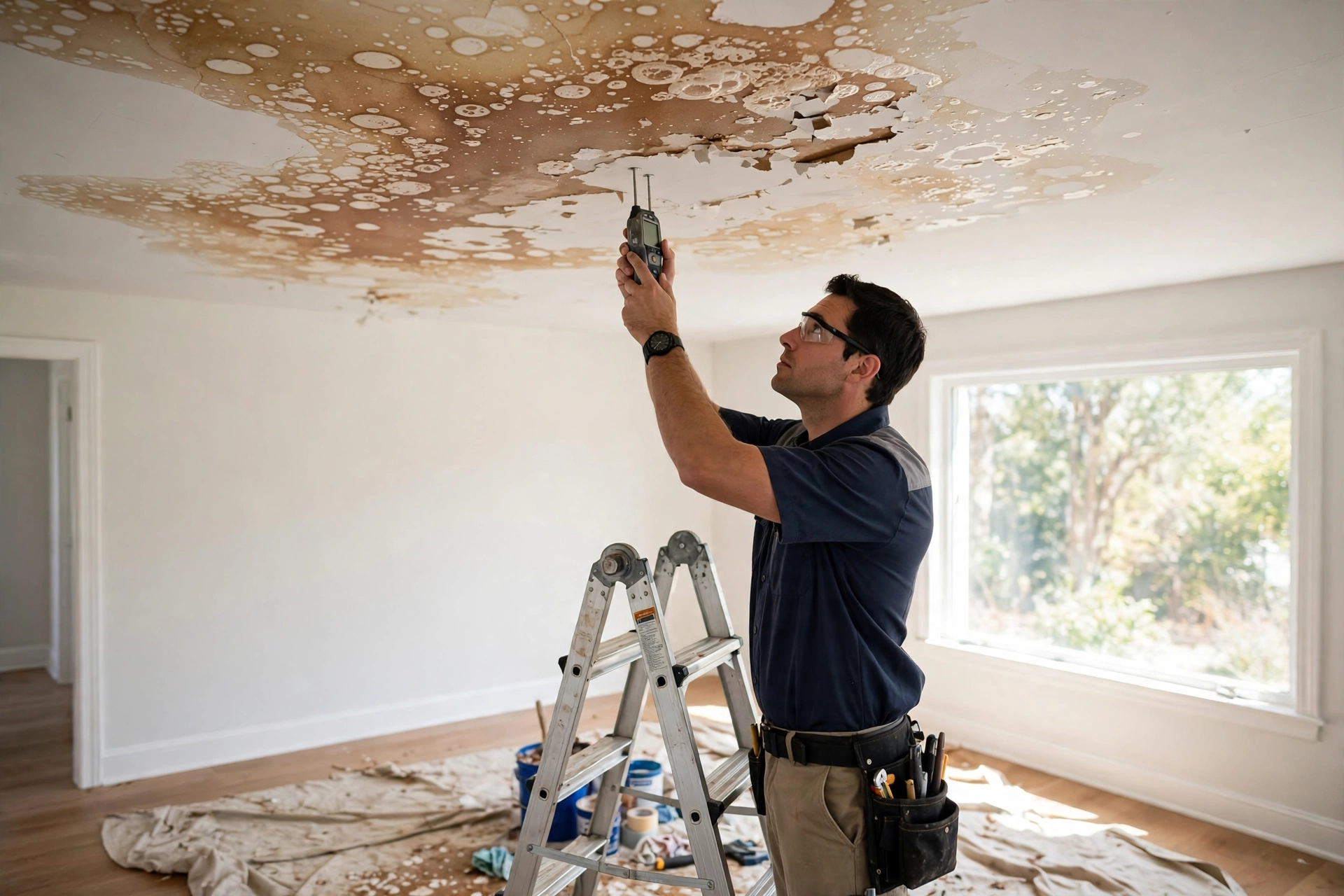
Then the cavity is dried with air movers and a dehumidifier, and we check it with a moisture meter before anything is rebuilt. A surface that looks dry can still be wet inside the cavity, and new board over a wet cavity traps moisture and grows mold. Finally, new drywall is hung, taped, mudded, sanded, textured to match the rest of the ceiling, and primed so it is ready for paint. Our ceiling water damage repair in DeSoto, TX follows this same order on every job, and our drying and moisture detection service is what confirms the ceiling is truly dry before we rebuild.
How long does it take? Draining and cutting out the failed section takes a few hours. Drying the cavity usually takes 2 to 5 days. Hanging and finishing the new board takes 1 to 2 more days, with drying time between coats of compound. A full ceiling replacement in a standard room is a bigger job, and we will tell you honestly when a patch is enough and when the whole ceiling needs to come down.

Once the cavity is dry, new drywall is hung, textured to match, and primed paint-ready.
DeSoto, TX
Sagging Ceilings in DeSoto, TX Homes
DeSoto sits 12 miles south of Dallas, in southern Dallas County, on I-35E and I-20. Most homes here are one-story and split-level brick homes built in the 1970s and 1980s, and many have upstairs bathrooms or AC units in the attic sitting directly above a living room or bedroom ceiling. That is the classic setup for a sagging ceiling: a slow leak upstairs that nobody sees until the ceiling downstairs starts to bow.
The causes we see most in DeSoto are roof leaks after spring and summer storms, upstairs bathroom leaks, AC drain lines that clog in the summer heat, and burst pipes in a winter freeze. Texas summer humidity also makes drying slower. A ceiling that gets wet in July stays wet longer than the same leak in a dry climate, because the air is already full of moisture. That is one more reason not to wait: every day a ceiling stays wet is a day the board gets weaker and mold gets a better start.
We work across DeSoto, in ZIP codes 75115 and 75123, and in neighborhoods including The Meadows, Thorntree, Eagle Crest, Brandonwood, Frost Farms, Amber Terrace, Hidden Lakes Estates, and Summit Parks. If your ceiling is sagging, call (469) 933-0245 now and tell us what you see. If you are not sure whether it is sagging or just stained, describe it to us and we will tell you honestly whether it can wait until morning or needs someone tonight. You can also read more about water damaged drywall repair in DeSoto, TX and the nearby cities we serve.
Related Services
Not sure which one you need? Call us at (469) 933-0245.
More From the Blog
Guides for DeSoto homeowners, written by DeSoto Drywall Pros.
FAQ
Is a Sagging Ceiling Dangerous? Questions We Hear in DeSoto
Is a sagging ceiling dangerous?
Yes. A sagging ceiling is holding trapped water, and wet drywall is much heavier and weaker than dry board. A bulging section can drop all at once, with wet insulation and water. Clear the room, keep everyone out from underneath it, and call (469) 933-0245.
How long before a sagging ceiling falls?
There is no safe time limit. A ceiling can hold for days or fall within hours. The board keeps softening while it stays wet, and the screws keep pulling through. Do not wait to see if it gets worse — clear the room and call for help the same day you notice the sag.
Can I poke a small hole in the bulge to drain the water?
Do not poke the middle of a bulge. It releases all the trapped water at once, along with wet drywall. A controlled drain is a small hole at the lowest edge, made from the side with the room cleared. It is a job for a crew, not someone standing on a chair underneath it.
Will a sagging ceiling dry out on its own?
No. The board is already too soft to recover, and the cavity above it stays wet long after the surface looks dry. A sagging section has to be cut out. Drying only helps board that is still firm and flat.
Who do I call for a sagging ceiling in DeSoto, TX?
Call DeSoto Drywall Pros at (469) 933-0245, 24/7. Tell us the ceiling is sagging and whether water is still coming in. We make the area safe, drain the water in a controlled way, cut out the failed board, dry the cavity, and rebuild it paint-ready.
Is a Sagging Ceiling Dangerous? Call Before It Falls
Is a sagging ceiling dangerous? Yes — and it will not get safer while you wait. Clear the room, then call DeSoto Drywall Pros at (469) 933-0245. We answer 24/7 in DeSoto, TX, and we will tell you honestly whether it needs someone tonight.
📞 Call (469) 933-0245 Now